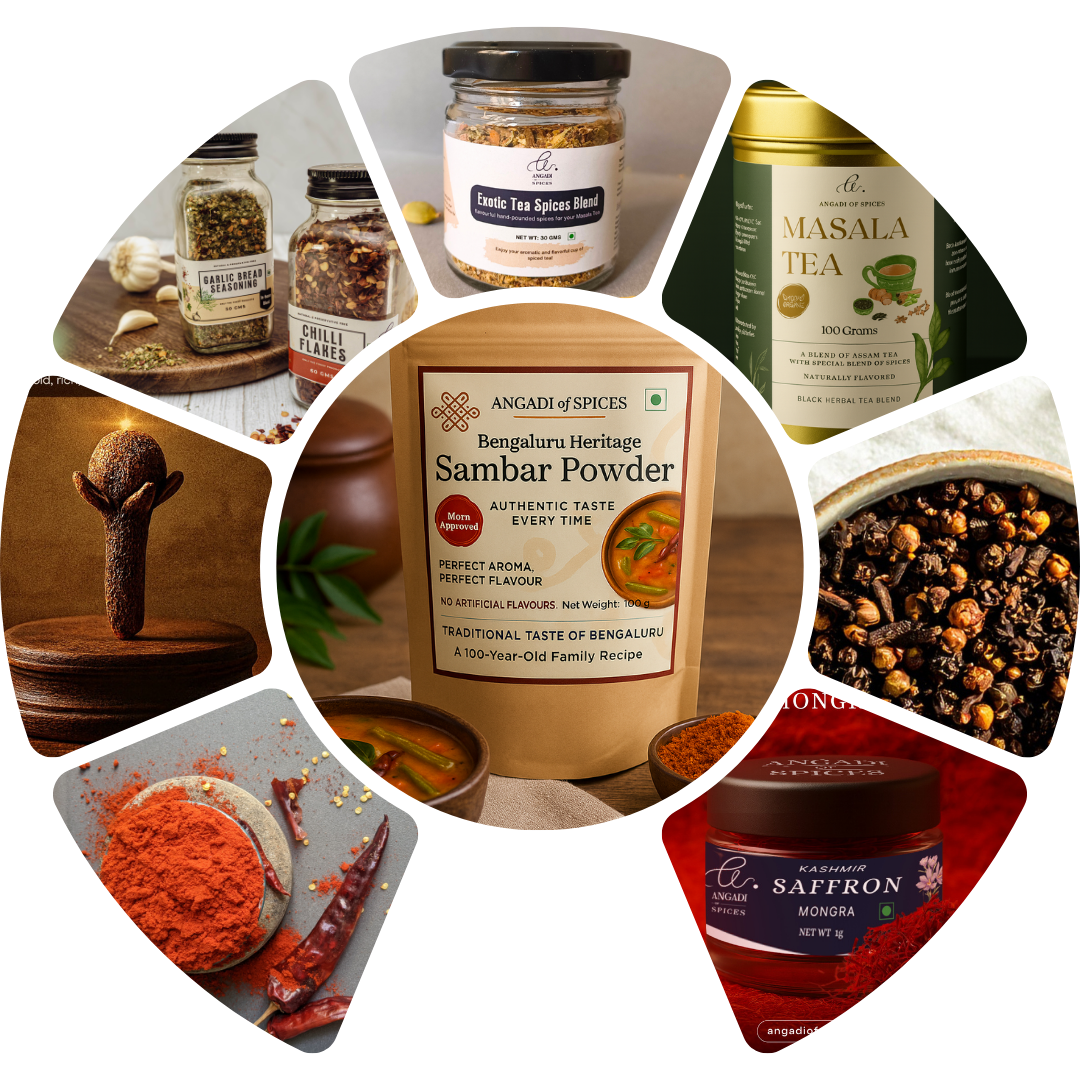

The Spices That Make Our Festivals Feel Like Home
A festival often arrives in the kitchen before it reaches the rest of the house.
It begins with cardamom being crushed for payasam, cumin spluttering in hot ghee, or saffron slowly releasing its colour into a bowl of warm milk. Even before the rangoli is finished, the diyas are lit or the guests arrive, these aromas tell us that this is not an ordinary day.
For many of us, the fragrance of spices is inseparable from our memories of festivals. It takes us back to crowded kitchens, steel containers lined up on the counter, sweets being prepared in large batches and someone reminding us not to taste them before they are offered to the deity.
Every Festival Has Its Own Aroma
Across India, every festival and every family has its own way of using spices.
During Diwali, cardamom and saffron find their way into laddoos, kheer and other homemade sweets. For Ganesh Chaturthi, the aroma of cardamom rises from freshly steamed modaks. Onam brings the comforting flavours of pepper, cumin, mustard and curry leaves to the sadya. During Eid, saffron, cloves and cinnamon lend their warmth to biryani, sheer khurma and sevaiyan.
The recipes may change from one state to another and even from one home to the next, but spices remain part of the celebration. They turn familiar ingredients into dishes that are prepared only for special occasions and waited for all year.

The Colours of Celebration
Spices also give festive food its unmistakable colour.
Turmeric lends its golden warmth to savoury dishes and is closely associated with auspicious beginnings in many Indian traditions. Saffron brings a rich golden hue to milk, sweets and rice dishes, while chilli adds the vibrant reds we recognise in festive gravies, pickles and snacks.
These colours do more than make the food look inviting. They become part of how we remember a celebration, the yellow of a festive rice dish, the deep brown of slow-roasted spices or the first streaks of saffron spreading through warm milk.

Wisdom Within Our Recipes
Indian festive meals are often generous. There are fried snacks, rich gravies, sweets soaked in ghee and second helpings that are difficult to refuse.
Traditional recipes balance this richness with spices such as cumin, ginger, fennel, ajwain and black pepper. These spices have long been valued in Indian kitchens for the flavour, warmth and sense of balance they bring to a meal.
This is the quiet wisdom built into many of our food traditions: indulgence is welcomed, but it is thoughtfully balanced.
A Taste That Travels With Us
For Indians living away from home, spices carry an even deeper meaning.
A familiar aroma can close the distance between countries. Cardamom simmering in chai, mustard seeds crackling in a pan or cloves warming a pot of pulao can make an unfamiliar kitchen feel like home, if only for a few moments.
Recipes may be adapted to the ingredients available, and celebrations may take place far from extended family, but the aroma remains familiar. It becomes a way of carrying home with us.
A Pinch That Holds Generations
When we reach into a masala dabba, we are often reaching for more than an ingredient. We are continuing something learned by watching a mother, grandmother, father or aunt cook, often without measuring spoons or written recipes.
A pinch of cardamom may recall a grandmother’s kheer. A little extra pepper might be the way a father always prepared rasam. The exact blend used in a festive dish may belong only to one family.
That is what makes spices so deeply personal. They do not merely flavour our festive food. They preserve family habits, regional traditions and memories that are passed from one generation to the next.
Long after the decorations are taken down and the last sweet is shared, the aroma stays with us. And perhaps that is why festivals feel like home wherever we celebrate them.

This post was contributed by Advaith Ulli, a student at Vidyashilp Academy, as part of his internship with Angadi of Spices.